
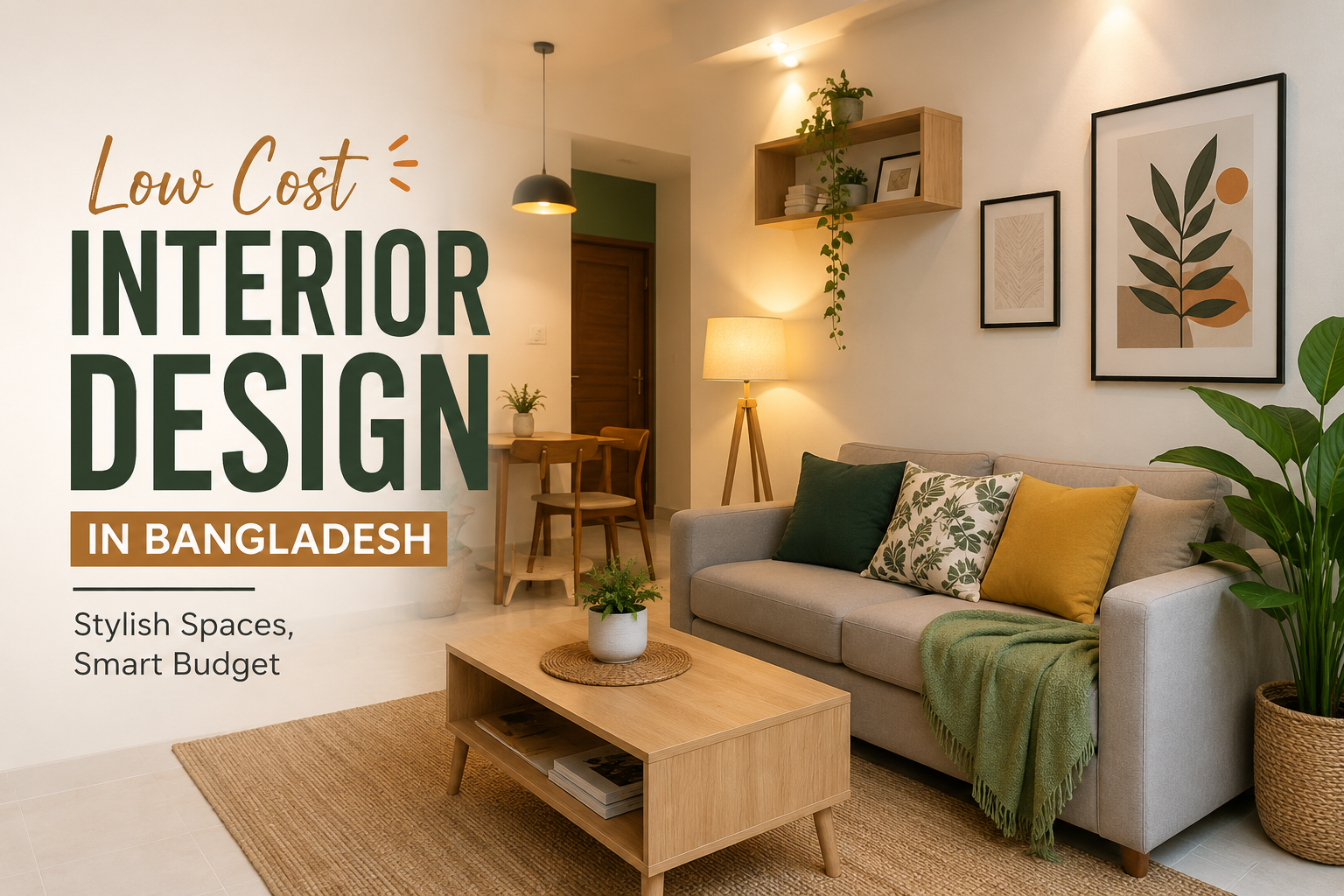
Designing a home does not always mean spending a huge amount of money. With the right planning, you can create a comfortable and attractive interior without paying for things you do not really need.
In my experience, the biggest difference comes from planning the space properly before buying materials or furniture. When you know where to spend and where to save, even a limited budget can work surprisingly well.
What Does Budget-Friendly Interior Design Mean?
Budget-friendly interior design is about making smart choices, not simply choosing the cheapest option. Good planning helps you control the cost while keeping the home functional, comfortable, and visually balanced.
You may spend more on things that affect daily use, such as kitchen hardware, electrical work, or waterproofing. At the same time, decorative walls, excessive ceiling work, and unnecessary accessories can often be kept simple.
How Much Does Interior Design Cost in Bangladesh?
Interior design costs can vary widely depending on the apartment size, materials, furniture requirements, design style, and level of customization. Labour and execution requirements also have an impact on the final quotation.
There is no single price that works for every home. A compact apartment with basic finishes will need a very different budget from a larger home with custom furniture and premium materials. Costing depends few things like –
Cost Per Square Feet
Many interior companies use square feet as one way to estimate project costs. It gives you a starting point, but the final cost depends on what is included in the package.
Ask whether the quotation covers furniture, electrical work, lighting, ceiling, painting, kitchen cabinets, wardrobes, labour, and installation. Two quotations with the same per-square-foot rate may include very different things.
What Affects the Total Cost?
The size of your home is only one part of the calculation. Material selection and the amount of custom work can change the budget quite quickly.
Your design style also matters. Minimal designs usually require fewer decorative elements, while detailed woodwork, feature walls, custom furniture, and complex lighting can increase the overall cost.
Sample Budget for Different Apartment Sizes
Instead of fixing one price for every apartment, start with your requirements. List the rooms you want to complete and decide which work is essential for moving in.
For example, you might complete the living room, bedrooms, kitchen, and wardrobes first. Decorative upgrades can come later when the budget allows.
How to Plan Your Home Interior on a Limited Budget?
Start with your actual needs rather than collecting design ideas from social media. It is easy to fall in love with a beautiful room and forget that your own apartment has different dimensions, storage needs, and daily routines.
I always find it more practical to divide the budget into priorities. First deal with essential work, then furniture and storage, and finally decorative elements.
1st, Set Your Budget
Decide how much you are comfortable spending before starting the project. Keep some money aside for changes or unexpected work because renovation rarely goes exactly according to the first plan.
Share your budget honestly with the designer. It makes material selection and design decisions much easier.
2nd, Prioritize Important Areas
Not every room needs the same level of investment. Kitchen, bathroom, wardrobes, electrical work, and storage often deserve more attention because you use them regularly.
Decorative features can be kept simple. This is where you can save without making the home feel unfinished.
3rd, Plan Before Starting Work
Do not start construction or furniture work before finalizing the basic layout. Changes during execution can waste both material and money.
Think about furniture size, electrical points, lighting, storage, and movement around the room first. Small planning decisions can prevent expensive corrections later.
4th, Keep a Separate Budget for Furniture and Decor
Furniture can take up a large part of the interior budget. Decide which pieces you actually need before ordering everything at once.
You can also reuse good furniture from your existing home. A new layout, fresh upholstery, or better lighting can sometimes give an old piece a completely different look.
Affordable Interior Ideas for Apartments
Apartment interiors need careful planning because floor space is limited. The goal should be to make the home feel open while giving every important item its proper place.
Simple design often works better in smaller apartments. Too many panels, heavy furniture, and decorative features can make the space feel crowded.
Make Better Use of Available Space
Measure the room before choosing furniture. Large furniture may look impressive in a showroom but can make an apartment difficult to move around.
Keep enough walking space around sofas, dining tables, beds, and cabinets. Good circulation makes even a compact room feel more comfortable.
Choose Multifunctional Furniture
Furniture that serves more than one purpose can be useful in small apartments. Storage beds, compact dining units, benches with storage, and built-in cabinets can help reduce clutter.
You do not need every piece to be custom-made. Use custom work where the space really requires it and choose standard furniture where possible.
Keep the Ceiling Simple
False ceilings can improve lighting and hide services, but they do not need to cover every part of the home. Simple borders or focused ceiling details can create a clean appearance.
Spend more attention on lighting placement than complicated ceiling shapes. Good lighting can make a simple ceiling look much better.
Use Paint for Wall Finishing
Paint is often a practical option when you want to control the budget. The right colour can change the feel of a room without adding expensive wall treatments.
You can use one feature wall where it makes sense and keep the remaining walls simple. This creates contrast without filling the room with decorative materials.
Add Open Shelving
Open shelves can provide storage and display space without making the room feel too heavy. They work well for books, small plants, décor, and everyday items.
Just keep them organized. Too many objects on open shelves can quickly make the room look cluttered.
Choose Practical Lighting
You do not need expensive lights everywhere. Use general lighting for the room and add focused lights where you actually need them.
Pendant lights, wall lights, under-cabinet lighting, and warm accent lights can create different moods without requiring an elaborate lighting system.
Affordable Living Room Ideas
The living room usually gets the most attention because it is where family members spend time and guests are welcomed. You can keep it attractive without filling every wall with custom work.
Start with the sofa, TV position, circulation, and lighting. Once those elements work together, smaller details such as curtains, cushions, plants, and artwork can finish the space.
Budget Bedroom Ideas
Bedroom design should focus more on comfort and storage than decoration. A simple bed, practical wardrobe, suitable lighting, and good curtains can create a calm environment.
Avoid filling the bedroom with large decorative pieces. Keep enough free space around the bed and make sure wardrobes are easy to access.
Affordable Kitchen Design Ideas
Kitchen work needs more planning because materials, hardware, plumbing, electrical points, and storage all come together. Saving money here should not mean choosing poor-quality components.
Focus on cabinet layout and usable storage first. Choose finishes that are easy to clean and hardware that can handle regular use.
Dining Room Ideas for Small Budgets
Dining spaces do not need complicated furniture or wall treatments. A well-sized dining table, comfortable chairs, suitable lighting, and one simple visual feature can be enough.
If your dining area is connected to the living room, keep both spaces visually connected. Similar colours, materials, or lighting can make the apartment feel more organized.
Affordable Materials for Home Interiors
Material selection has a direct effect on both appearance and cost. The cheapest material is not always the smartest choice, especially for areas that receive heavy daily use.
Ask your designer about the difference between material options. Look at durability, maintenance, finish, and hardware quality instead of comparing price alone.
Boards and Laminates
Boards and laminates are widely used for wardrobes, cabinets, TV units, and other furniture. Different board types and surface finishes come with different levels of durability and cost.
For frequently used furniture, pay attention to both the board and the hardware. A good-looking cabinet can still become frustrating if hinges, channels, or fittings do not perform well.
Paint and Wall Finishes
Paint offers plenty of flexibility for budget-conscious interiors. You can change the mood of a room through colour without adding heavy construction work.
Use decorative finishes selectively. One well-planned feature usually works better than treating every wall differently.
Flooring
If the existing floor is in good condition, you may not need to replace it. This can remove a significant part of the renovation cost.
When new flooring is necessary, compare durability, maintenance, installation, and appearance. The right choice depends on how the room will actually be used.
Kitchen Materials
Kitchen materials need to handle moisture, heat, cleaning, and regular use. Choose based on performance first and appearance second.
Cabinet finishes, countertop materials, hinges, drawer channels, and handles all contribute to the final result. Cutting costs in the wrong place can lead to repairs later.
Wardrobe Materials
Wardrobes are used every day, so internal organization matters as much as the outside finish. Plan hanging space, shelves, drawers, and storage according to what you actually own.
You do not need an elaborate wardrobe exterior. A clean finish with sensible internal storage can look modern and remain practical for years.
Lighting and Hardware
Lighting and hardware are small parts of the overall visual design but have a big impact on daily use. Poor switches, sockets, hinges, channels, or lighting positions can become annoying very quickly.
Choose reliable products for high-use areas. Decorative lighting can be upgraded later if necessary.
Where Should You Spend More?
Some parts of the project are difficult to fix once the work is complete. These areas deserve more attention even when the overall budget is tight.
I would be careful about reducing costs in electrical work, plumbing, waterproofing, kitchen hardware, and structural or core materials. These are not the places where a small saving is always worth the risk.
Where Can You Save Money?
You have more flexibility with decorative elements. Feature walls, accessories, complex ceiling patterns, and custom décor can often be simplified.
You can also reduce costs by reusing furniture, selecting standard sizes, limiting unnecessary partitions, and avoiding design elements that have little practical value.
How to Reduce Interior Costs Without Sacrificing Quality
Cost control works best when you make decisions early. Last-minute changes often create additional labour, material waste, and delays.
Compare quotations carefully rather than choosing the lowest number. Check what each company has included, which materials they propose, and whether installation and related work are part of the price.
Other practical ways to control the budget include:
- Reuse suitable existing furniture
- Choose locally available materials
- Limit unnecessary customization
- Finalize the design before execution
- Use standard furniture sizes where possible
- Keep decorative work selective
- Compare material and hardware options
Common Mistakes to Avoid
Most budget problems do not come from one expensive item. They often come from many small decisions made without a clear plan.
Choosing the cheapest material everywhere is one common mistake. Another is spending heavily on decoration while ignoring storage, electrical planning, or durable hardware.
Changing the design after work has started can also increase costs. Make the important decisions before execution begins.
How to Choose an Interior Design Company in Bangladesh?
Choosing the right company matters when you have a limited budget. You need someone who can understand your priorities instead of simply adding more work to the quotation.
Look at completed projects and ask detailed questions about materials, execution, supervision, timelines, and payment stages. A clear quotation is much more useful than an attractive presentation with vague pricing.
1. Check Previous Projects
Look for projects similar to your apartment size and requirements. A company may have impressive luxury projects, but that does not automatically mean they are good at handling a controlled budget.
Ask to see completed work where possible. Finished projects tell you more about execution quality than 3D renders alone.
2. Compare Quotations
Do not compare only the final price. Check the quantity, material specification, furniture scope, electrical work, ceiling, painting, installation, and other inclusions.
If one quotation looks much cheaper, ask why. There may be differences in materials or scope that are not obvious at first.
3. Check Material Specifications
Ask for the actual material type and specification. Terms such as “premium board” or “high-quality hardware” are not enough to make a useful comparison.
Knowing what you are paying for gives you more control over the project and makes quotation comparisons easier.
4. Understand What the Package Includes
Some companies focus mainly on design while others provide design and complete execution. Make sure you understand who handles procurement, installation, site supervision, and finishing.
This prevents confusion once the project starts.
5. Check Execution and Supervision
Good design can lose its value through poor execution. Ask who will supervise the site and how the company handles changes or quality issues during the work.
For many homeowners, reliable project management is just as important as the design itself.
Is Affordable Interior Design Worth It?
Yes, when the budget is controlled through planning rather than through careless material choices. You can create a comfortable home without paying for every trend you see online.
The key is knowing what matters to your daily life. Spend on durability, safety, storage, and function first. Then use decoration to add personality.
Frequently Asked Questions
How much does home interior design cost in Bangladesh?
The cost depends on apartment size, design scope, materials, furniture, labour, and customization. Instead of relying on one general figure, ask for a detailed quotation based on your actual floor area and requirements.
What is the cheapest way to design an apartment?
Start with essential spaces and keep the design simple. Reusing furniture, choosing standard sizes, using paint instead of extensive wall treatments, and limiting unnecessary custom work can help control the budget.
Which materials are best for a limited budget?
The right option depends on where the material will be used. Compare board type, laminate, countertop, hardware, flooring, and finishes based on durability and maintenance rather than price alone.
Can I design a 2-bedroom apartment on a small budget?
Yes. Start with the living room, bedrooms, kitchen, and essential storage. Keep decorative work simple and prioritize layouts that make the available space easier to use.
Should I hire an interior designer for a small-budget project?
It can make sense when you need help with space planning, material selection, budgeting, and execution. The value comes from reducing mistakes and making better use of the available space.
Which rooms should I prioritize?
Start with areas that affect daily life the most. Kitchen, bedrooms, storage, bathrooms, electrical work, and living spaces are usually more important than decorative upgrades.
How do I compare interior design quotations?
Compare the scope, material specifications, quantities, furniture details, labour, installation, electrical work, and finishing. Do not select a quotation simply because it has the lowest total.
How can I maintain quality while reducing expenses?
Simplify the design rather than compromising on important materials. Save on decoration and unnecessary customization while maintaining quality in electrical work, plumbing, waterproofing, hardware, and frequently used furniture.
Final Thoughts
You do not need an unlimited budget to make your home feel well designed. What you need is a clear idea of how you live, what your apartment needs, and where your money should go.
Start with the layout and essential work. Choose materials carefully, keep decorative elements under control, and make decisions before the execution begins. A thoughtful design can make a modest budget work much harder for your home.
If you are planning an apartment interior in Bangladesh, Tilottoma Limited can help you plan the design, materials, and execution around your space and requirements. The first step is simply to discuss what you need and what you want to spend.