
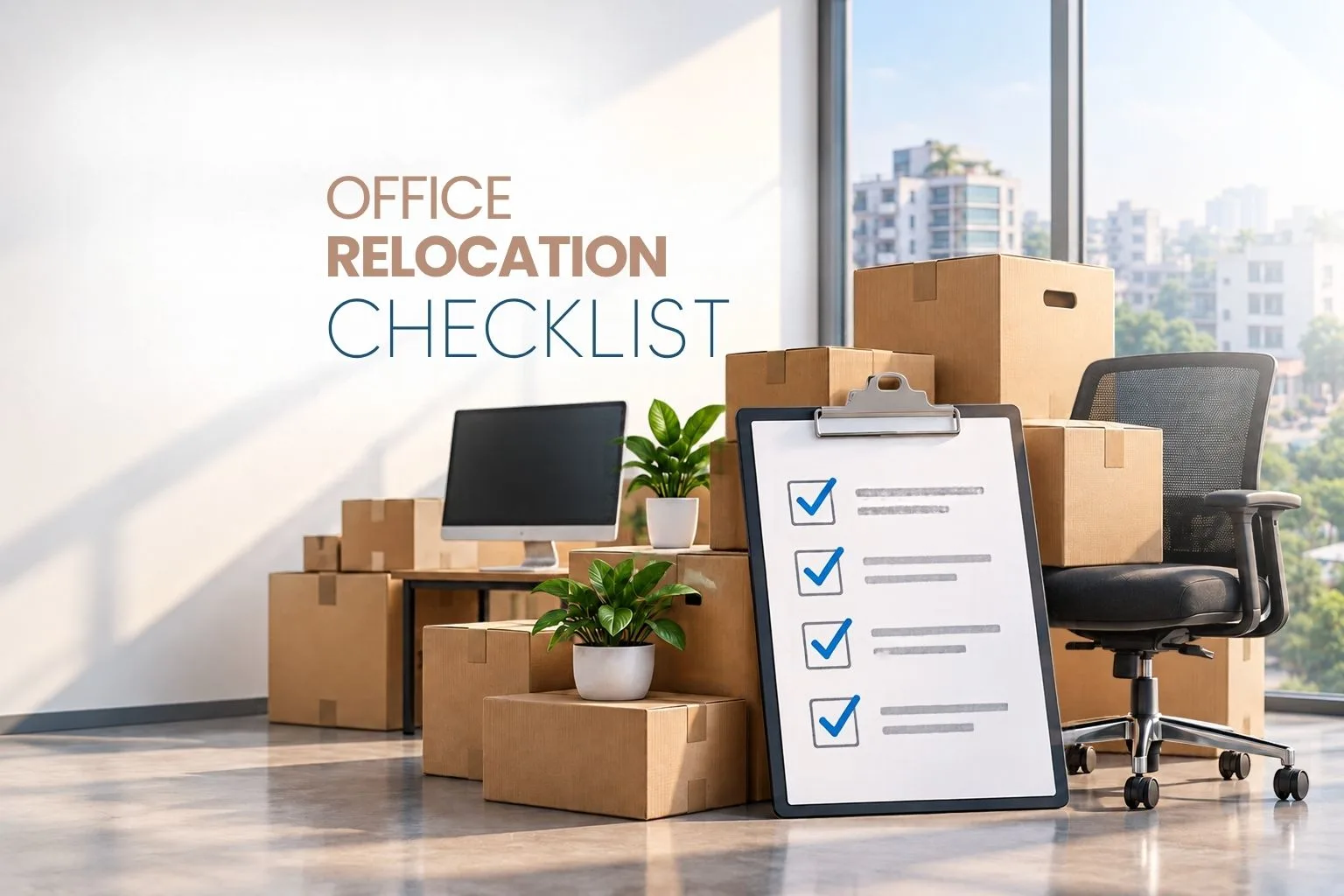
Moving to a new office involves much more than transporting desks and computers. You need to prepare the new space, plan the layout, coordinate interior work, move equipment safely, update your business information, and make sure everything is ready before your team arrives.
A proper office relocation checklist helps you manage these tasks in the right order and reduces last-minute problems.
Checklist of Office Relocation
Office relocation involves more than moving furniture from one place to another. A smooth move requires proper planning, budgeting, space preparation, and coordination so your team can settle into the new workspace without unnecessary disruption. Use this checklist to organize each stage of your office relocation.
1. Set Your Relocation Goals and Budget

Start by understanding why you are moving and what you expect from the new office. Your requirements will be different if you are moving because of business growth, a better location, or the need for a more functional workspace.
Your relocation budget should cover both the move itself and the preparation of the new office. Consider the major expenses before finalizing the property or signing agreements.
- New office interior and fit-out
- Furniture and storage
- Moving and transportation
- IT and networking
- Internet and utility connections
- Signage and branding
- Security and access control
- Cleaning and maintenance
- Packing materials
- Temporary storage, if required
Keep some additional budget for unexpected work or changes during the relocation.
2. Finalize the New Office Space
Before moving forward, inspect the new office carefully. A space may look suitable during a property visit but create practical problems after furniture, workstations, meeting rooms, and equipment are added.
Check the usable floor area, building facilities, access, and technical requirements. Also consider how easily the space can support your planned office layout.
Important things to check include:
- Usable floor area and floor plan
- Natural light and ventilation
- Parking and visitor access
- Lift and loading access
- Power supply and electrical capacity
- Internet availability
- Air conditioning options
- Fire safety arrangements
- Washrooms and pantry facilities
- Building access hours and restrictions
3. Plan the Office Layout
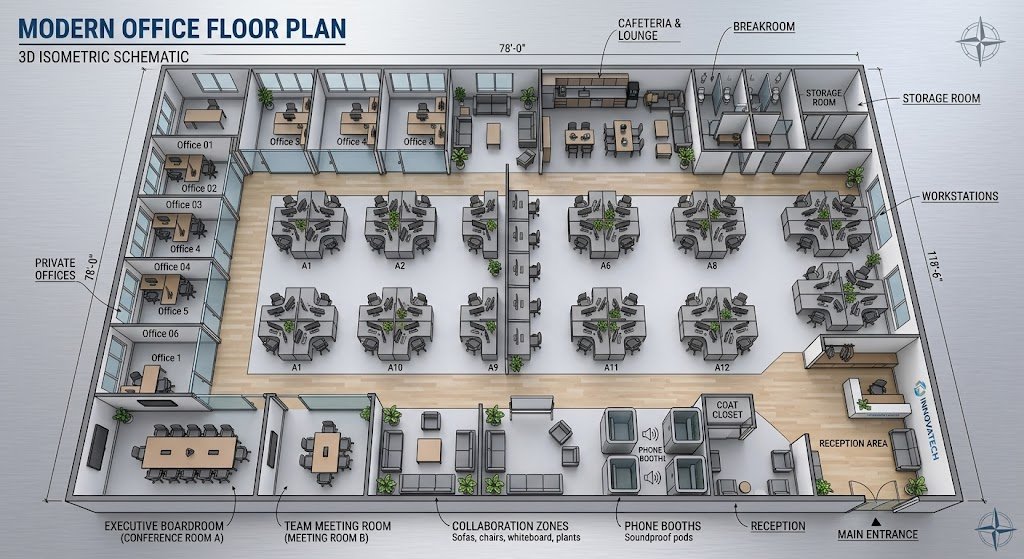
Do not wait until the furniture arrives to decide where everything will go. Prepare the layout before relocation so you know exactly how the new space will be used.
The layout should consider both current requirements and possible future growth. Workstations should have enough circulation space, meeting rooms should be easy to access, and support areas such as storage and pantry should not interfere with the main workspace.
Plan areas such as:
- Reception and waiting area
- Workstations
- Executive and manager cabins
- Meeting and conference rooms
- Pantry and break area
- Storage
- Server or IT room
- Collaboration areas
- Circulation paths
4. Decide What to Move and What to Replace

Office relocation is a good opportunity to review your existing furniture, equipment, and storage. Moving everything without checking its condition can create unnecessary transportation and installation costs.
Create an inventory and divide items into categories such as:
- Move to the new office
- Repair before moving
- Replace with new items
- Sell or donate
- Dispose of
Check workstations, chairs, cabinets, meeting tables, computers, printers, networking equipment, and other valuable items before packing.
5. Complete the New Office Interior

The new office should be substantially ready before employees arrive. Coordinate interior work and furniture installation according to the relocation schedule.
Depending on the project, this may include:
- Flooring
- False ceiling
- Painting
- Glass or solid partitions
- Electrical points
- Lighting
- Workstations
- Executive furniture
- Storage
- Reception counter
- Meeting rooms
- Pantry
- Signage and branding
Allow time for final inspection and corrections. A small unfinished item can become a major inconvenience if employees start working before it is resolved.
6. Prepare IT, Internet, and Office Systems
IT preparation should happen alongside the interior work, not after everything else is finished. Network points, power connections, server requirements, and equipment locations should be considered during layout planning. Test the important systems in the new office before the team moves in.
Before moving day, confirm:
- Internet connection
- Wi-Fi coverage
- Network cabling
- Data points
- Computers and printers
- Server and backup systems
- CCTV
- Access control
- Telephone or communication systems
- Meeting room technology
7. Inform Employees, Clients, and Suppliers

Give employees enough notice so they know what to expect during the transition. Provide the new address, moving schedule, parking information, building access details, and the first working day at the new location.
Clients, suppliers, courier services, banks, and other important contacts may also need the new address.
Update the address across your business channels, including:
- Website
- Google Business Profile
- Social media
- Email signatures
- Business cards
- Letterheads
- Invoices
- Online directories
- Company profiles
Keeping the information consistent helps prevent visitors, deliveries, and clients from going to the old location.
8. Prepare for Moving Day

Moving day should have a clear plan instead of being handled as everything arrives. Label boxes according to department or room so they can be placed directly in the correct area. Keep important documents and essential equipment separate from general office items.
Before the move:
- Confirm the moving company and schedule
- Confirm building and lift access
- Prepare an inventory of valuable equipment
- Label boxes and furniture
- Protect computers and fragile equipment
- Keep important documents separate
- Confirm who will supervise the move
- Keep essential items accessible
For expensive equipment, maintaining an inventory and photographing the items before transportation can also help with tracking.
9. Complete a Final Inspection
Do a complete walkthrough before the first working day. Check both the physical space and the systems your employees will use. Resolve major issues before employees arrive instead of dealing with them during the first working day.
Make sure:
- Lights and switches are working
- Power outlets are functioning
- Air conditioning is operating
- Internet and Wi-Fi are available
- Furniture is installed correctly
- Meeting room equipment works
- CCTV and access control are active
- Plumbing and washrooms are ready
- Fire safety arrangements are in place
- Signage is installed
- The office has been properly cleaned
Office Relocation Timeline
A relocation timeline depends on the size of the office and the amount of interior work involved. For a planned move, you can broadly organize the process like this:
8 to 12 weeks before:
Finalize the new office, layout, budget, interior requirements, vendors, and relocation plan.
4 to 8 weeks before:
Start interior work, order furniture, arrange IT infrastructure, and inform employees and key contacts.
2 to 4 weeks before:
Confirm the moving company, start packing non-essential items, update business information, and begin testing utilities and IT systems.
1 week before:
Complete packing, confirm building access, inspect the new office, and test essential systems.
Moving day:
Transport equipment and furniture, supervise installation, connect essential systems, and check the new office.
First working day:
Help employees settle in, check office systems, and address any remaining issues.
Final Office Relocation Checklist
Make sure the new office, furniture, IT systems, utilities, and address updates are ready before your team moves in. For office relocation planning, interior design, and fit-out support, Tilottoma Limited can help you prepare the new workspace. A well-planned move means fewer disruptions and a smoother start.