
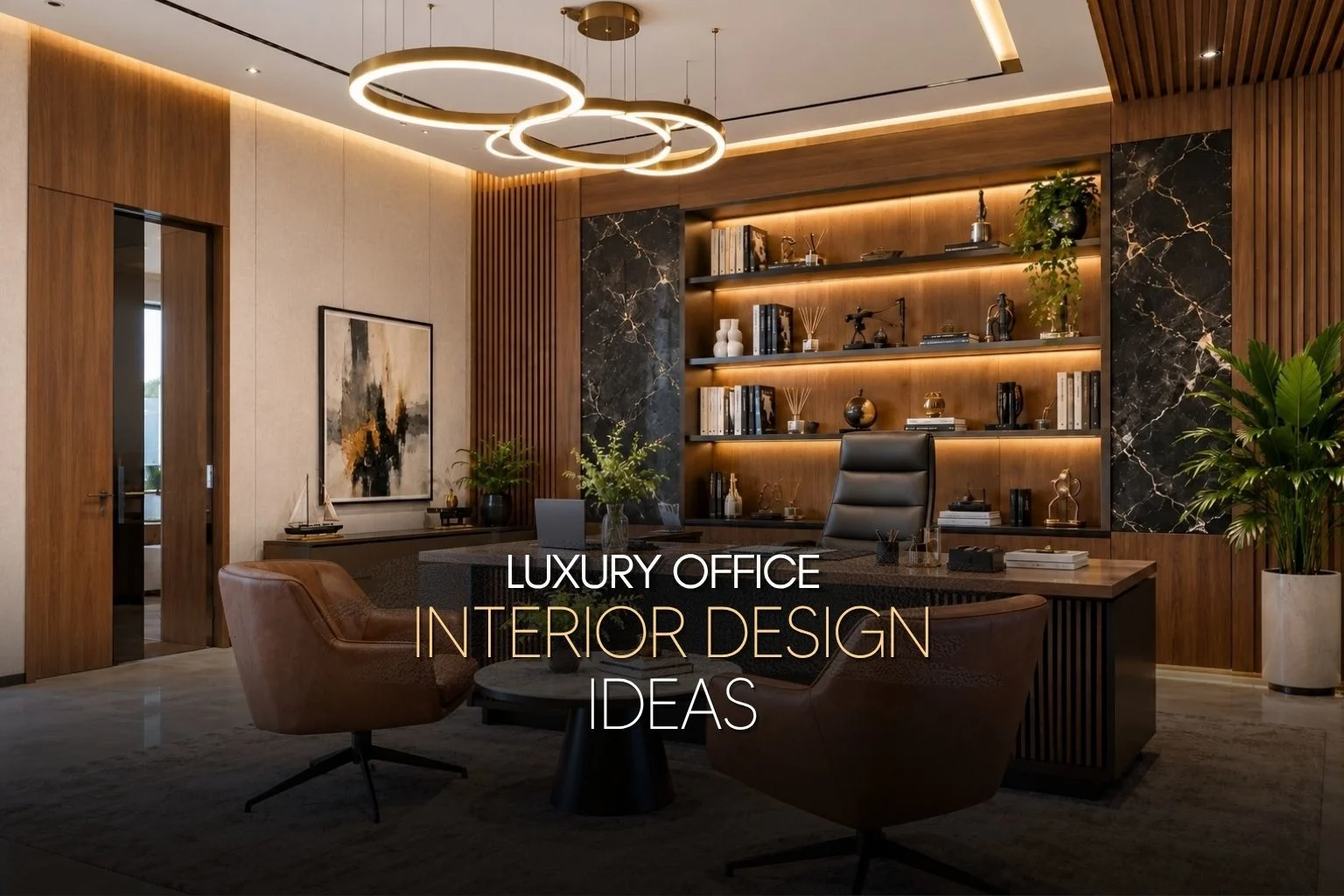
There is a moment when a client walks into a truly well-designed luxury office and stops. Just for a second. They take it in. The materials, the light, the quiet confidence of the space. And before a single word is spoken, they have already decided this company is serious.
That is the power of luxury office design. It does not shout. It does not try too hard. It simply commands respect through every detail.
What Makes an Office Truly Luxurious?
Luxury is not about spending the most money. I have seen expensive offices that felt cold and soulless. And I have seen thoughtfully designed offices at moderate budgets that felt genuinely premium. The difference is intention.
A luxury office has three defining qualities. Every material is chosen for quality, not just appearance. Every space serves a clear purpose without feeling functional in a cheap way. And every detail — from the door handle to the ceiling light — feels considered. When all three come together, the result is unmistakable.
1. Space Planning
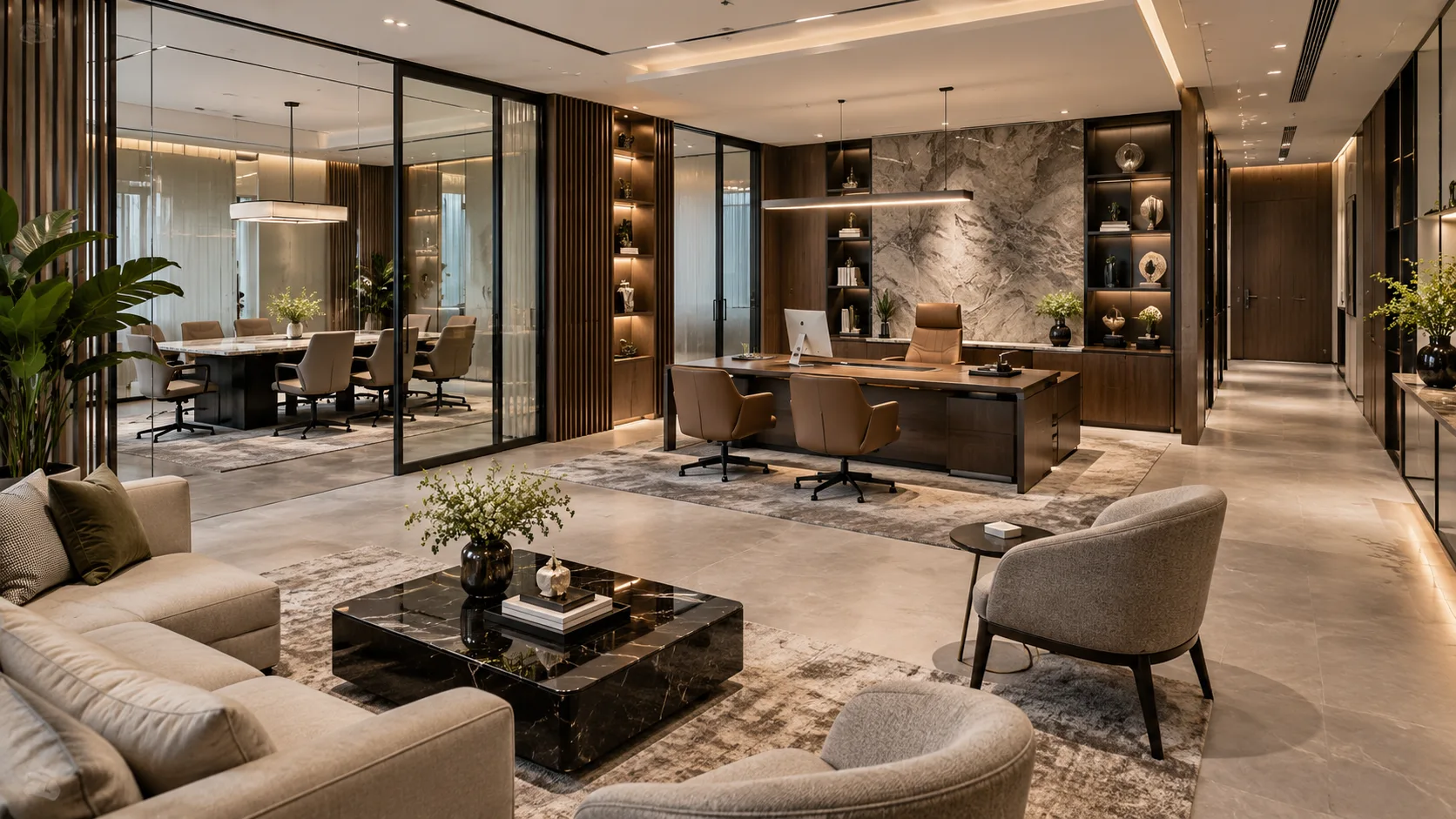
Luxury starts with space itself. Generous, uncluttered space is one of the clearest signals of a premium environment. Crowded offices, no matter how expensive the furniture, never feel truly luxurious.
Give Breathing Room to Every Zone
In a luxury office, no zone feels cramped. Workstations have generous desk sizes with comfortable clearance on all sides. Meeting rooms have space to walk around the table comfortably. The reception area has room to breathe, not just enough room to stand.
If your floor plan forces you to squeeze, reconsider the number of workstations before compromising on space. A luxury office with 20 comfortable workstations is far more impressive than one trying to fit 35.
Separate Zones with Purpose
Luxury office has clearly defined zones, a reception and waiting area, open work areas, private cabins, meeting rooms of different sizes, a lounge or informal discussion area, and a well-appointed pantry. Each zone has its own character while remaining visually connected to the whole.
Consider a Dedicated Client Area
In a truly luxury setup, clients experience a separate world from your internal operations. A dedicated client lounge, meeting suite, or presentation room — finished to a higher standard than the rest of the office — tells your clients they are valued. This separation also protects the privacy and workflow of your team.
2. Reception and Entrance Design
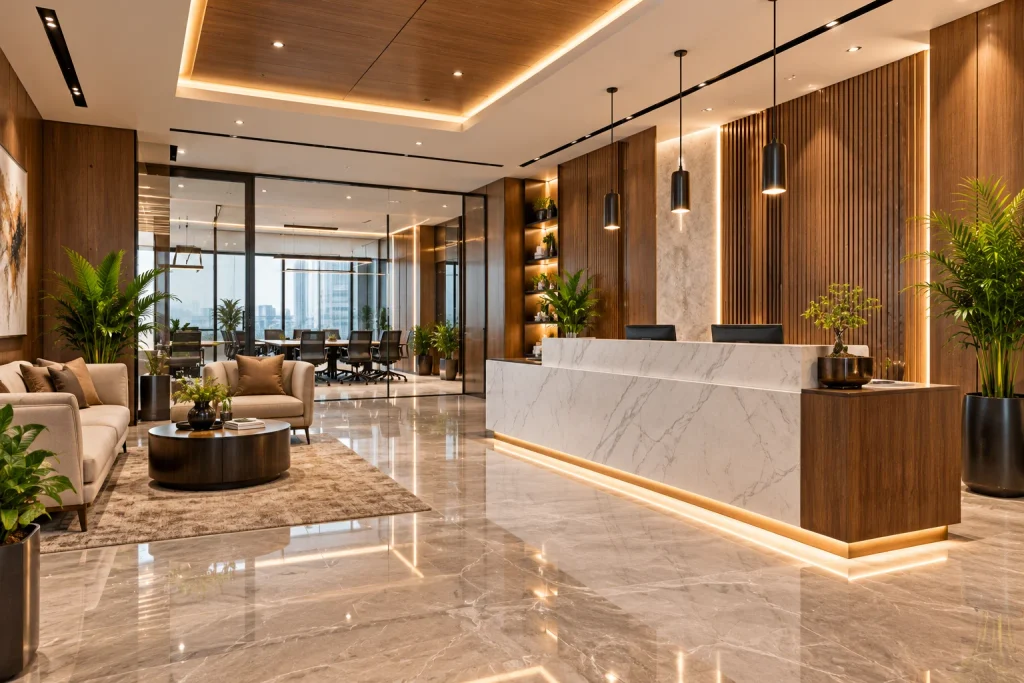
The entrance of a luxury office is a stage. Everything placed here must earn its position.
Feature Wall and Brand Identity
A backlit logo wall is the standard. Go beyond that. Consider a textured stone wall, a custom wood panel installation, or a sculptural element behind the reception. The material and the scale of this feature wall set the tone for the entire office.
Reception Counter Design
The reception counter in a luxury office is custom-built. Not purchased from a catalogue. It uses premium materials – marble tops, wood veneer panels, brass or brushed steel accents. The proportions are generous. The finish is flawless.
Waiting Area
Luxury waiting is comfortable waiting. Choose seating that is genuinely comfortable — not just visually appealing. A sofa or lounge chairs in quality fabric or leather. A low coffee table in marble or glass. Subtle background music. A curated magazine display or art piece. And lighting that flatters rather than glares.
Every element tells the waiting visitor: you are in good hands.
3. Premium Materials and Finishes
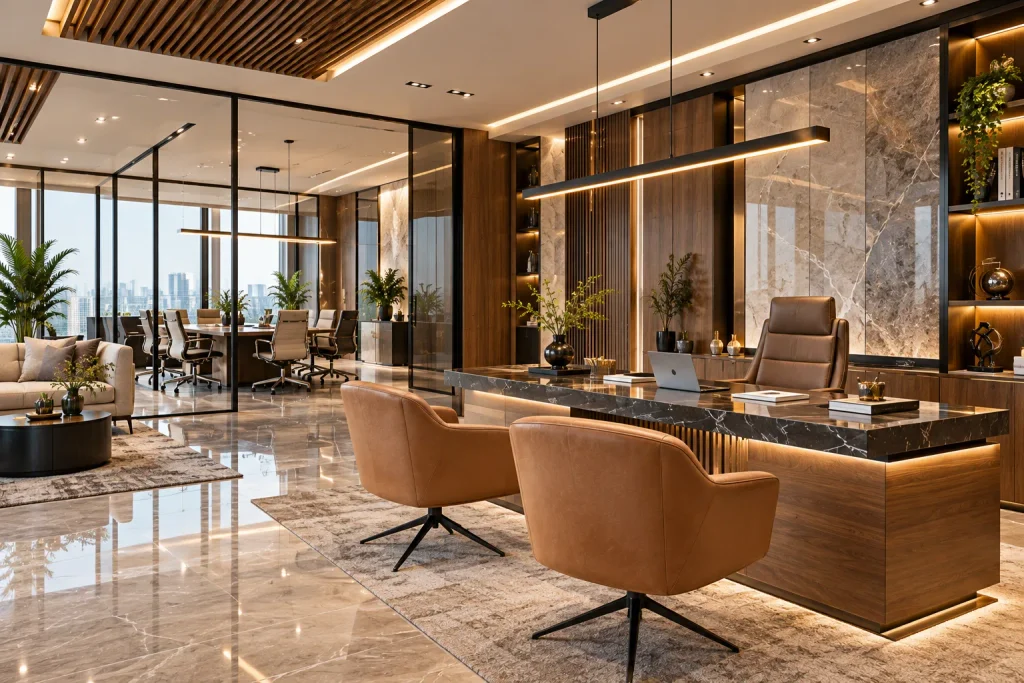
This is where luxury office design truly separates itself. The materials you choose communicate quality at a subconscious level. Clients and employees both feel the difference, even if they cannot always name it.
Natural Stone
Marble, granite, and travertine bring an unmistakable sense of permanence and quality. Use marble on reception counters, executive desk surfaces, feature walls, or flooring in key areas. Marble is not a background material — it is a statement. Use it where it will be seen and appreciated.
Wood Veneer and Solid Wood
Real wood or high-quality veneer panels add warmth, richness, and sophistication. Use them on executive cabin walls, meeting room feature walls, reception counters, and custom joinery. The grain, texture, and natural variation of wood cannot be replicated by laminates or printed finishes — and discerning clients notice the difference.
Metal Accents
Brass, brushed gold, brushed nickel, and matte black metal accents elevate every element they touch. Door handles, light fixtures, shelf brackets, cabinet pulls — these small details accumulate into a consistent feeling of quality throughout the space. Choose one metal tone and use it consistently across all hardware and fixtures.
Glass
Floor-to-ceiling glass partitions, frameless glass doors, and glass balustrades communicate openness and modernity. In a luxury office, glass work is frameless or minimally framed. Heavy aluminum frames feel outdated and budget-level in a premium context.
Acoustic Wall Panels
Luxury offices are quiet offices. Acoustic panels in fabric, felt, or leather not only control sound but add a rich textural layer to walls. In meeting rooms and executive cabins, these panels serve both function and aesthetics beautifully.
4. Color Palette
The color palette of a luxury office is restrained and deliberate. Bold, unpredictable color combinations are a creative studio’s language, not a luxury corporate office’s.
Neutral Foundation
Deep white, warm ivory, greige, and soft taupe form the foundation of most luxury office palettes. These tones are sophisticated without being sterile. They allow premium materials and accent colors to take center stage.
Rich Accent Colors
Against a neutral foundation, one rich accent color creates depth and personality. Deep navy, forest green, charcoal, burgundy, or warm bronze work beautifully. These are colors that feel serious and timeless rather than trendy or playful.
Metallic as a Color Element
Gold, brass, and bronze tones function as a warm accent color in their own right. Used in lighting, hardware, and decorative elements, they add a layer of warmth and luxury that cool grey palettes often lack.
5. Lighting Design
Lighting in a luxury office is layered, controlled, and always flattering. It is never an afterthought.
Ambient Lighting
Recessed LED lighting provides general brightness without visual clutter. In a luxury office, the ceiling is clean. No exposed fittings, no surface-mounted boxes, no visible wiring. Everything is flush, hidden, or intentionally decorative.
Statement Pendant Lights
A luxury office earns its statement lighting pieces. A custom pendant light or chandelier in the reception, meeting room, or director’s cabin immediately elevates the space. This is not about chandeliers for their own sake — it is about choosing a lighting fixture that is genuinely beautiful as an object and enhances the space it occupies.
Warm Accent Lighting
Cove lighting, wall washing, and under-shelf lighting add depth and dimension to walls and surfaces. When a marble wall is lit from below or a wood panel wall is washed with warm light from above, the material comes alive in a way that overhead lighting alone can never achieve.
Dimmable Controls
Every zone in a luxury office should have dimmable lighting. The ability to shift from bright task lighting to soft ambient mood lighting gives the space versatility and sophistication. A meeting room that transitions from bright presentation mode to intimate discussion mode is a small but powerful detail.
Human Centric Lighting
High-end offices internationally are now integrating lighting that shifts color temperature through the day — brighter and cooler in the morning to promote alertness, warmer in the afternoon to reduce fatigue. This is a growing standard in premium corporate design and worth considering for a truly future-ready luxury office.
6. Executive Office and Director Cabin
The director’s cabin in a luxury office is a world of its own. It communicates authority, vision, and taste simultaneously.
The Executive Desk
A custom-built executive desk in solid wood or veneer with stone top inserts is the centerpiece of the cabin. The proportions matter enormously. Too large and it feels like compensation. Perfectly scaled to the room and the person, it feels commanding.
Wall Treatment
Floor-to-ceiling wood veneer paneling is the classic choice for an executive cabin. It adds warmth, depth, and a sense of permanence. Combine it with integrated shelving, hidden storage, and a feature panel in a contrasting material for a layered, sophisticated result.
In-Cabin Meeting Table
Every executive cabin in a luxury office has a small meeting table with four to six chairs. This allows private, intimate discussions without moving to a formal meeting room. It also signals that the executive values personal engagement.
Personal Touches
A curated art piece, a small sculpture, a carefully chosen bookshelf arrangement — the director’s cabin should feel like a person inhabits it, not a set designer. These personal touches humanize the authority of the space and make guests feel more comfortable.
7. Meeting Rooms and Boardroom Design
In a luxury office, the boardroom is the most important room after the director’s cabin. It is where the company’s most significant conversations happen.
The Boardroom Table
A custom boardroom table in solid wood, stone, or a combination of both is the heart of the room. The table should be proportioned to the room — not too small, not overwhelming. Built-in power and data outlets flush with the surface keep the table clean.
Technology Integration
A luxury boardroom has seamless technology. A large display or dual screens, a high-quality video conferencing system, a wireless presentation system, automated blinds, and integrated audio — all controlled from a single panel or tablet. The technology serves the meeting without demanding attention.
Acoustic Perfection
Sound control in a luxury boardroom is non-negotiable. Acoustic ceiling tiles, fabric wall panels, and carpeting work together to create a room where voices are clear, private, and free of echo. Conversations feel contained and confidential.
Lighting Control
Dimmable ambient lighting, presentation mode with lowered lights and a bright screen, and natural light control through motorized blinds — a luxury boardroom adapts to every type of meeting seamlessly.
8. Lounge and Informal Collaboration Areas
The best luxury offices understand that not all valuable work happens at a desk or in a formal meeting room. Informal conversation, spontaneous collaboration, and creative thinking happen in lounge spaces.
A luxury office lounge has premium sofas or armchairs in quality fabric or leather, a low coffee table in marble or glass, warm lighting that is noticeably different from the work area, and perhaps a curated bookshelf or art installation nearby. It feels like a very well-appointed private members club — comfortable, quiet, and refined.
9. Pantry and Executive Dining Area
In a luxury office, the pantry is not a corner with a microwave. It is a properly designed space that respects the people who use it.
A luxury office pantry has quality countertops in stone or solid surface material, premium cabinetry with soft-close fittings, a proper coffee machine station, clean and well-lit storage, and seating that is genuinely comfortable. Some high-end corporate offices in Dhaka now include a dedicated executive dining area for private client lunches — a separate, beautifully appointed room with a dining table, servery counter, and refined finishes.
10. Flooring
Flooring in a luxury office is one of the largest visual surfaces in the space. It deserves serious attention.
- Marble or large-format porcelain — the most premium choice for reception and main corridors. The scale of the tile matters — large format tiles with minimal grout lines feel far more luxurious than small tiles.
- Engineered wood or premium LVT — warm, sophisticated, and comfortable underfoot for open work areas and executive cabins.
- Wool or high-quality carpet — boardrooms, executive cabins, and client lounges benefit from carpet. It controls sound, adds warmth, and signals quality. Choose a subtle pattern or a deep, solid tone.
- Combination flooring — using different materials to define zones is a powerful design tool. Marble in the reception, wood in the work area, carpet in the boardroom — each zone has its own material language while the overall palette remains unified.
11. Art and Decorative Elements
Art transforms a luxury office from impressive to memorable. It adds soul, conversation, and cultural sophistication.
Work with a local art consultant or curate pieces from Bangladeshi artists. Original artwork — paintings, sculptures, photography — is always more powerful than printed reproductions. Place art where it will be genuinely seen and appreciated: the reception feature wall, the boardroom end wall, the corridor leading to the director’s cabin.
Beyond art, decorative elements like sculptural vases, curated books, high-quality decorative objects, and carefully chosen plants all contribute to the overall feeling of a space that has been thought about deeply.
12. Biophilic Luxury
Nature and luxury are natural partners. The most prestigious offices and hotels in the world integrate living greenery as a design element, not an afterthought. In a luxury office context, biophilic design goes beyond a plant on a desk. Consider a full living wall in the reception – a vertical garden that becomes a genuine focal point.
Incorporate large statement plants – fiddle leaf figs, monstera, or architectural palms – in corners and open areas. Use natural stone, real wood, and woven natural textures throughout to reinforce the connection to the natural world. The effect is a space that feels alive, calm, and deeply pleasant to be in.
FAQ
What is the difference between a corporate office and a luxury office?
A corporate office meets professional standards. A luxury office exceeds them in every dimension — materials, space, technology, lighting, art, and the quality of every detail. It is the difference between good and exceptional.
What materials define a luxury office interior?
Natural stone, real wood veneer, quality glass, premium metal accents in brass or brushed steel, acoustic fabric panels, and high-end carpet or engineered wood flooring. These materials age beautifully and signal quality at a level that manufactured alternatives cannot match.
How much does a luxury office interior cost in Bangladesh?
Expect Tk. 3,500 to Tk. 12,000+ per sq ft depending on the level of finish, materials, and customization. A genuinely luxury office in Dhaka typically starts at around Tk. 5,000 per sq ft for the fit-out alone.
Do I need an interior designer for a luxury office?
Without question. Luxury design is not about buying expensive things. It is about proportion, material harmony, lighting mastery, and spatial intelligence. An experienced interior designer is the difference between a space that feels genuinely luxurious and one that merely looks like money was spent.
Can biophilic elements work in a luxury office in Bangladesh’s climate?
Absolutely. Air-conditioned offices in Dhaka support a wide range of indoor plants beautifully. A living wall or large statement plants are low-maintenance with proper irrigation and lighting systems, and they elevate the environment dramatically.
Final Words
A luxury office is one of the most powerful investments a company can make in its own identity. It shapes how clients see you, how employees feel about their work, and how the world perceives your brand. Design it with the seriousness it deserves, choose your design partner carefully, and never compromise on the details that make the difference between impressive and unforgettable.