
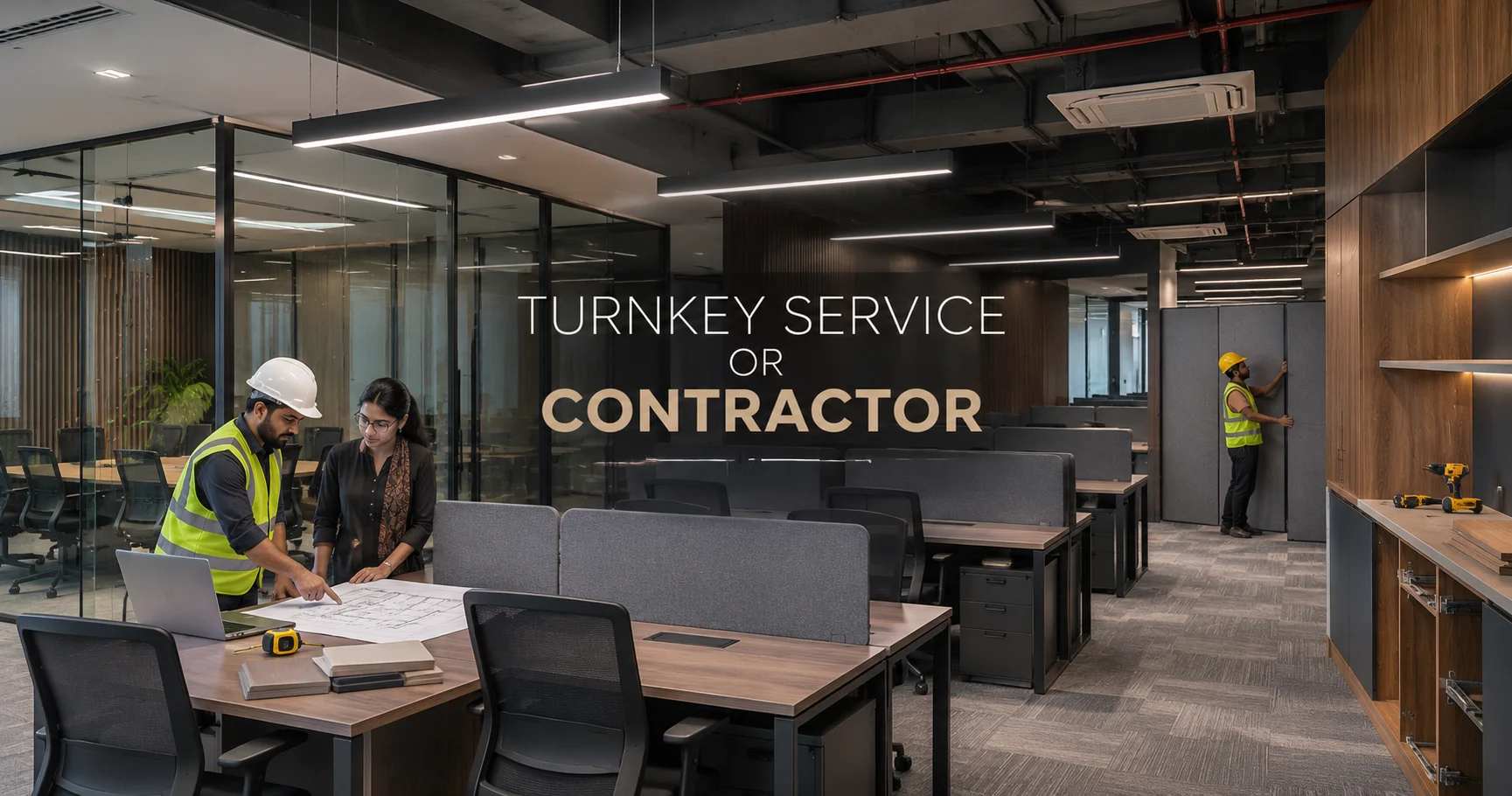
You can hire one company to manage your office interior from design to handover. Or you can hire separate contractors for work such as partitions, electrical installation, ceilings, and furniture.
Both options can work well. The right choice depends on your budget, the size of your project, and how much time you can spend managing the work. Here is what to consider before you decide.
What Does Turnkey Office Interior Mean?
With a turnkey service, one company manages the agreed parts of your office project. Depending on your contract, this can include space planning, design, material selection, construction, furniture, and final checks.
You share your needs, review the plans, and approve key choices. The company coordinates the included work and gives you one main point of contact. Check the written scope carefully, though. “Turnkey” does not always mean that every item, such as computers, networking, or air conditioning, is included.
If you are still planning your space, these office interior design ideas can help you think through layout, lighting, storage, and other needs before you request a quote.
What Does Hiring Separate Contractors Mean?
You hire different people or companies for different parts of the job. For example, you might work with a designer, then hire separate teams for electrical work, carpentry, painting, and furniture.
This gives you direct control over who does each task. It also means someone needs to coordinate the schedule, check the work, and make sure each team follows the same drawings. That person may be you, someone on your staff, or a project manager you hire.
Turnkey vs Separate Contractors
| What to compare | Turnkey service | Separate contractors |
| Main contact | One company for the work in its contract | Different contacts for each trade |
| Coordination | The company coordinates included teams | You or your project manager coordinates teams |
| Supplier choice | Depends on the company and your agreement | You choose each contractor and supplier |
| Your time | Usually less day-to-day coordination for you | More time spent following up and solving clashes |
| Cost review | One project quote, which should include a detailed BOQ | Several quotes and costs to track |
| Responsibility | The company is responsible for its agreed scope | Responsibility is split across contracts |
Neither option guarantees a lower cost or a faster finish. Clear drawings, realistic planning, good communication, and a written scope matter in both.
Which Option May Cost Less?
Separate contractors can cost less when you already know reliable suppliers and can manage the work. You can compare prices for each task and choose where to spend more or save.
But separate quotes may leave gaps. One contractor may include installation but exclude delivery. Another may price the wiring but not the lights. Keep a record of what each quote includes, excludes, and assumes.
A turnkey quote may look higher at first because it can include planning, coordination, and project management. Ask for an itemised BOQ so you can see the materials, quantities, labour, and services behind the total. A detailed quote makes it easier to compare the full scope, not just the final number.
Which Option Takes Less of Your Time?
A turnkey service can reduce the number of people you need to coordinate. You still need to make decisions and approve materials, but one main contact can update you on the work covered by the contract.
With separate contractors, you may need to schedule each team and check when one trade is ready for the next. For example, ceiling work may depend on electrical work being completed first. If you are also running your business, those follow-ups can take time.
Your project length will depend on the office size, design, materials, approvals, and site conditions. Read more about how long office interior design can take as you plan your move or renovation.
When Is Turnkey a Good Fit?
Turnkey may suit you if:
- You want one company to manage the work listed in the agreement.
- Your office needs several connected services.
- You do not have staff available to coordinate contractors each day.
- You want a single, written scope and one main contact.
- You prefer to spend more time running your business than managing site work.
Before you sign, check the company’s past office projects, the BOQ, the material details, and the work it excludes. A single contact is helpful only when the responsibilities are clear.
When Should You Hire Separate Contractors?
Separate contractors may suit you if:
- You already have trusted people for the work.
- You or your project manager can visit the site and coordinate teams.
- You want to choose each supplier yourself.
- Your project has a clear design and a simple scope.
- You are comfortable tracking separate budgets and schedules.
This approach gives you more direct control, but it also puts more coordination on your side. Make sure every contractor has the current drawings and knows when their work should start.
Questions to Ask Before You Choose
Whichever approach you choose, ask these questions before work begins:
- What work is included in the quote?
- What is excluded?
- Which materials, brands, and finishes are specified?
- Who will coordinate the different teams?
- How will you approve changes and extra costs?
- What is the expected timeline and payment schedule?
- Who checks the work before handover?
Get the answers in writing. If you change a material or request extra work, ask for the cost and time impact before approving it.
So, Which Is Better for Your Office?
Choose turnkey if you want one company to manage the agreed work and you have limited time to coordinate the project. Choose separate contractors if you want direct supplier control and have the time or experience to manage them.
Start with your office plan, budget, and available time. Then compare offers using the same scope and specifications. Tilottoma Limited provides interior design service including design development and BOQ preparation, which can help you understand the proposed work and cost before moving ahead.