
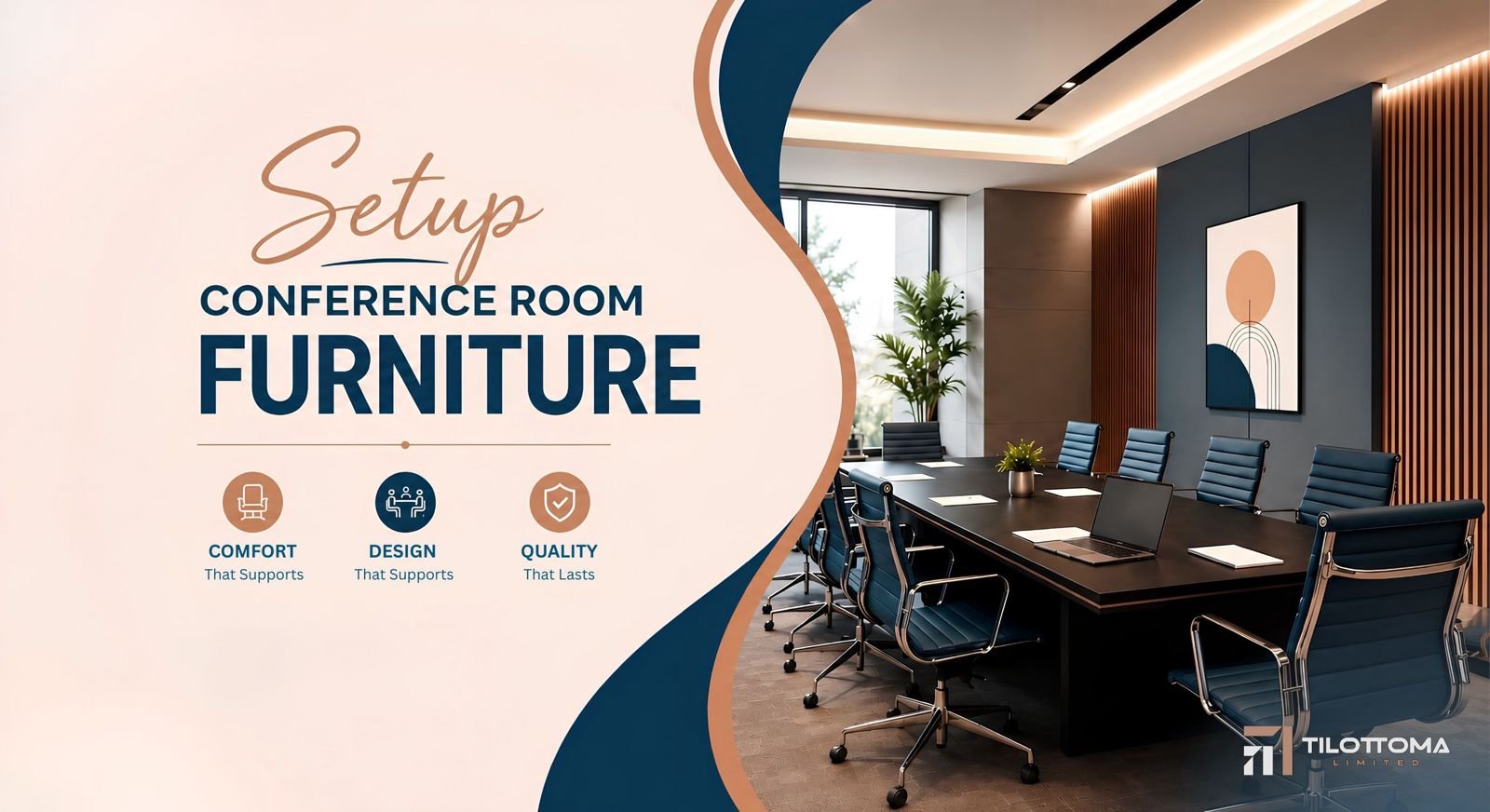
Conference room furniture shapes how people meet, talk, listen, present, and make decisions inside your office. It is not only a table and a few chairs.
The right setup can make a room feel calm, clear, and ready for serious work. The wrong setup can make even a good office feel crowded or uncomfortable.
I always look at the room first, not the furniture catalog. Because a meeting room has one job. It should help people stay focused and work better together. That’s why to better showcasing owners should consult with an interior design firm.
Why Conference Room Furniture Matters More Than It Looks?
Conference room furniture affects the feeling of the room before the meeting even starts. People notice the table size. They notice the chairs. They notice if the room feels tight, messy, or easy to use.
Good furniture supports the way people meet. It helps them sit comfortably, see each other, use their laptops, and follow the discussion without small distractions.
What the furniture affects
- How people move around the room
- How long they can sit comfortably
- How easy it is to see the screen
- How clean the room looks during meetings
- How professional the room feels to clients
- How well the space supports teamwork
Start With the Purpose of the Room
Do not choose conference room furniture before you know how the room will be used.
This is where many offices make the wrong choice. They buy a large table because it looks impressive. Then the room becomes hard to move through.
Start with the real use.
Will this room be for client meetings? Team planning? Training? Interviews? Video calls?
Each purpose needs a slightly different setup.
Common meeting room uses
- Client meetings
- Board meetings
- Team discussions
- Creative brainstorming
- Staff training
- Online meetings
- Interviews
- Internal planning
A room for client meetings may need a more formal table and better finish. A training room may need flexible tables and chairs that move easily.
Measure the Room Before Choosing Any Furniture
Room size should guide the furniture choice. Not the other way around. Before buying anything, measure the full space. Look at the door, windows, screen wall, walking paths, and power outlets.
A table may fit on paper, but still feel too large when people sit around it. Leave enough space for people to pull out chairs, walk behind others, and enter the room without squeezing.
What to measure
- Room length and width
- Door opening area
- Space around the table
- Screen or presentation wall
- Window position
- Power outlet location
- Storage or cabinet area
- Walking path from the door
This one step saves many design mistakes.
Choose the Right Conference Room Table
The conference table is the main anchor of the room. It decides how people sit, where they look, and how the room feels. A heavy table can make the space feel formal. A lighter modular table can make it feel open and flexible.
Pick the shape based tables on the room size and meeting style.
Rectangular conference tables
Rectangular tables work well for formal meetings, leadership discussions, and client presentations. They give the room a clear front and center. This works nicely when one person leads the meeting or when a screen is placed at one end.
The only problem is distance. In a long room, people at the far end may feel less connected.
Round conference tables
Round tables feel more open and equal. They are good for small teams, quick discussions, and rooms where everyone should feel part of the conversation.
They do not work as well for large meetings because they can take up more floor space than expected.
Oval or boat-shaped tables
Oval and boat-shaped tables give a softer look than straight rectangular tables. They still feel professional, but less stiff.
This shape works well when you want a boardroom feel without making the room look too sharp or heavy.
Modular conference tables
Modular tables are useful for flexible offices. You can move them, join them, separate them, or use them for training sessions.
They are not always as polished as one large boardroom table, but they give more freedom. For growing teams, that flexibility can be worth more than a grand design.
Pick Chairs Based on Meeting Length
Conference chairs should match how long people sit in the room. Short meetings do not need the same chair as long planning sessions. A simple chair may work for quick huddles. But for longer meetings, people need support.
Uncomfortable chairs slowly damage the meeting. People shift, lean, lose focus, and wait for it to end.
What to check in conference chairs
- Seat comfort
- Back support
- Seat height
- Armrest comfort
- Swivel or fixed base
- Wheels or no wheels
- Fabric, mesh, or leather finish
- Stackable or fixed style
For long meetings, choose chairs with better back support. For flexible rooms, lightweight or stackable chairs may make more sense.
Think About Ergonomics Without Making the Room Look Heavy
Ergonomics matters in a conference room, but the chair should still match the space. This is a balance. You want chairs that support the back, arms, and sitting posture. But you may not want large task chairs that make the room feel like a workstation area.
For long meetings, I would not compromise too much on comfort. People think better when they are not fighting the chair.
Good ergonomic details
- Supportive backrest
- Comfortable seat depth
- Stable base
- Smooth movement
- Armrests that do not block the table
- Height that works with the table
The goal is simple. People should sit naturally and focus on the meeting.
Plan for Technology Before the Furniture Arrives
Modern conference room design needs technology planning from the beginning. Do not place the table first and think about cables later.
That is how rooms end up with messy wires, blocked outlets, and awkward screen positions. Think about laptops, screens, video calls, microphones, speakers, and charging needs before the final furniture order.
Technology needs to plan early
- Power outlets
- USB charging points
- Cable boxes
- Under-table cable trays
- Video conferencing camera
- Microphones
- Wall screen or display
- Speakers
- Presentation remote storage
Clean cable management makes the room feel more professional. It also makes daily use easier.
Keep the Layout Open and Easy to Move Around
A conference room should not feel like a furniture storage area. Even a beautiful table can become a problem if the layout is too tight.
People need space to pull out chairs. Someone should be able to walk behind seated people without bumping into them. The room should also feel comfortable when everyone is inside.
A good layout gives breathing room. It makes the meeting feel calmer, even when the topic is serious.
Check the movement flow
- Can people enter easily?
- Can chairs move back without hitting the wall?
- Can someone walk around the table?
- Can people reach the screen or board?
- Can guests sit without feeling trapped?
If the answer feels forced, the furniture is too large.
Match the Furniture With Your Office Style
Conference room furniture should feel connected to the rest of the office.
It does not need to match everything perfectly. That can look flat. But it should belong to the same design language.
Think about your brand, clients, team culture, and the feeling you want the room to create.
A law office may need a more formal setup. A creative studio may need something lighter. A tech company may prefer a clean, flexible, modern look.
Design details that matter
- Wood finish for warmth
- White tables for a clean modern feel
- Dark finishes for a formal boardroom look
- Fabric chairs for softer comfort
- Leather chairs for an executive feel
- Metal legs for a clean commercial look
- Glass details for a lighter visual style
Choose the look with purpose. Not only because it is trendy.
Choose Materials That Can Handle Daily Use
Conference room furniture should look good, but it also has to survive real office use.
People place laptops, coffee cups, files, phones, bags, and chargers on the table. Chairs move in and out all day. So the material matters. A room used every day needs stronger finishes than a room used twice a month.
Materials to think about
- Laminate for easy cleaning
- Wood veneer for a warmer finish
- Solid wood for a premium feel
- Metal bases for strength
- Mesh chairs for breathability
- Fabric chairs for comfort
- Leather or faux leather for a formal look
Do not only ask, “Does it look good?”
Also ask, “Will it still look good after daily use?”
Make the Room Work for Hybrid Meetings
Hybrid meetings are now part of office life. Some people sit in the room. Others join from a screen. The furniture should support both groups. This means the table, chairs, camera, screen, and lighting need to work together.
If the table is too long, the camera may not capture everyone well. If the chairs are too high or too low, people may look awkward on screen. If the screen is placed badly, half the room keeps turning their neck.
What hybrid rooms need
- Clear screen view from every seat
- Good camera angle
- Proper microphone placement
- Clean table surface
- Low glare lighting
- Simple cable access
- Chairs that stay aligned
Hybrid design is not only about technology. Furniture plays a big role too.
Add Storage Only If the Room Needs It
Storage can help a conference room stay clean. But too much storage can make the room feel smaller and heavier.
First, think about what the room actually needs to hold. Some rooms only need a small cabinet for remotes, cables, markers, and papers. Others may need storage for training materials or product samples.
Do not add cabinets just to fill empty walls.
Useful things to store
- Cables
- Remotes
- Markers
- Notepads
- Chargers
- Presentation tools
- Guest supplies
- Training materials
Good storage should hide clutter, not become clutter.
Do Not Ignore Lighting, Privacy, and Acoustics
Furniture cannot fix everything. A good table and chair setup will still feel poor if the room has glare, echo, or no privacy. Lighting should help people see faces, screens, and papers clearly.
Privacy matters when meetings include clients, budgets, HR topics, or planning discussions. Sound matters too. A room with too much echo feels tiring.
Room comfort factors
- Natural light
- Screen glare
- Window treatment
- Door privacy
- Wall panels
- Carpet or rugs
- Soft chair materials
- Ceiling sound control
- Good lighting direction
This is where the room starts to feel finished, not just furnished.
Common Mistakes When Buying Conference Room Furniture
Most conference room mistakes happen because people buy too fast.
They see a nice table. They like the chair color. They order the set.
Then the real problems show up later.
The room feels tight. Cables look messy. The chairs are uncomfortable. The screen is hard to see. The table does not fit the way people actually meet.
Mistakes to avoid
- Buying furniture before measuring the room
- Choosing chairs only by looks
- Picking a table that is too large
- Ignoring cable management
- Forgetting video meeting needs
- Leaving no space around chairs
- Choosing weak materials for high-use rooms
- Forgetting future team growth
- Mixing styles without a clear reason
A meeting room should make work easier. If the furniture adds friction, it is the wrong choice.
Quick Conference Room Furniture Checklist
Before you buy, slow down for a few minutes.
This checklist helps you avoid the most common mistakes. It also helps you compare options without getting distracted by design photos.
Before you buy, check this
- Room size
- Number of users
- Main meeting type
- Table shape
- Table size
- Chair comfort
- Chair movement
- Screen position
- Power access
- Cable management
- Video call setup
- Storage needs
- Lighting
- Privacy
- Acoustics
- Cleaning needs
- Office style
- Budget
If one item feels unclear, solve it before placing the order.
Final Thoughts
The best conference room furniture is not always the biggest table or the most expensive chair. It is the setup that fits the room, supports the people, and makes meetings feel easier.
Start with the purpose. Measure the space. Choose the table and chairs around real use. Then plan technology, layout, lighting, storage, and comfort. To know more contact with Tilottoma Limited