A lot of people think interior design is just about making rooms look nice. Pick some furniture, choose a color, hang a few paintings. Done. That is not interior design, that is called decoration.
Interior design is something much bigger. And once you understand what it actually is, you will see why it matters – whether you own a home, run a business, or are about to renovate a flat in Dhaka.
What Interior Design Actually Means?
Interior design is the process of shaping how a space functions, feels, and looks. It involves space planning, material selection, lighting design, furniture layout, and how all these elements work together as a system.
A good interior designer does not just make a room prettier. They solve problems, they figure out how you move through a space, how light changes it throughout the day, where storage goes, and how to make a 600 sq ft apartment feel twice as large.
It is a part of art, part of science, part of psychology.
The Difference Between Interior Design and Interior Decoration
This confuses a lot of people. Here is the short version. Decoration is what you do after the design is in place. It is the cushions, the plants, the artwork. Interior design is the structure beneath all of that – the layout, the lighting plan, the flow of the space.
You can decorate without designing. But great spaces always start with design.
Why Interior Design Matters More Than You Think
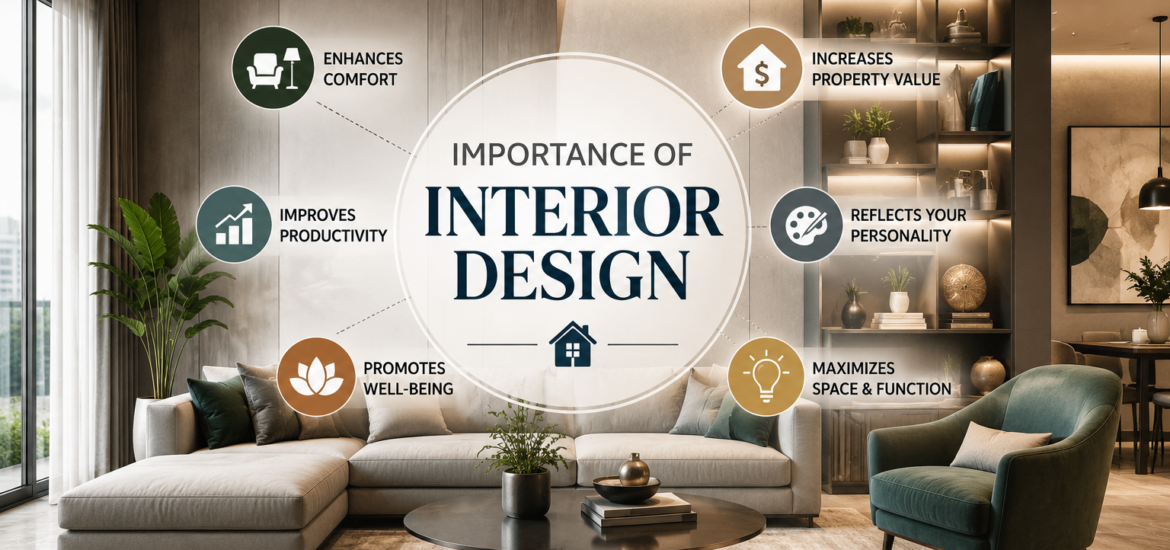
Interior design is more than choosing furniture or decorating a room. It shapes how a space looks, functions, and feels every day. Whether it’s a home, office, restaurant, or commercial space, thoughtful interior design improves comfort, supports daily activities, and creates an environment that reflects your lifestyle or brand.
1. Improves Space Utilization
A well-planned interior makes the best use of every square foot. It creates a more organized and functional space without making it feel crowded.
2. Enhances Comfort and Functionality
Interior design improves how you live or work every day. Every room is planned to support comfort, convenience, and practical use.
3. Reflects Your Personality and Lifestyle
Your space should tell your story. Interior design brings your preferences, habits, and lifestyle into every design decision.
4. Creates a Positive First Impression
The look and feel of a space influence how people perceive it. A thoughtfully designed interior leaves visitors, clients, and guests with a lasting impression.
5. Increases Property Value
A professionally designed interior makes your property more attractive to buyers and tenants. It can also increase its long-term market value.
6. Improves Productivity and Focus
A comfortable and organized environment helps people stay focused. This is especially important in offices, study rooms, and workspaces.
7. Enhances Health and Well-being
Good lighting, ventilation, and ergonomic planning create healthier living and working environments. They also help reduce stress and physical discomfort.
8. Optimizes Lighting
Proper lighting makes spaces brighter, safer, and more inviting. It also highlights architectural features and improves everyday activities.
9. Maximizes Storage and Organization
Smart storage solutions reduce clutter and keep everything within easy reach. This makes the space more efficient and easier to maintain.
10. Improves Safety and Accessibility
Interior design considers movement, accessibility, and safe layouts. This helps create spaces that are comfortable and easy for everyone to use.
11. Strengthens Brand Identity
For businesses, the interior should reflect the company’s image and values. Consistent branding creates a memorable experience for customers.
12. Creates a Better Customer Experience
A welcoming and functional interior encourages customers to stay longer. It also improves satisfaction and supports business growth.
13. Supports Sustainable Living
Using eco-friendly materials and energy-efficient solutions reduces environmental impact. Sustainable design also lowers long-term operating costs.
14. Makes Daily Life More Convenient
Every element is planned to simplify daily activities. From furniture placement to storage, good design makes life easier.
15. Balances Beauty with Practicality
Great interiors are not just attractive, they also work well. The right design combines visual appeal with everyday functionality.
Interior Design in Bangladesh Today
The interior design industry in Bangladesh has grown significantly over the last decade. Dhaka, Chattogram, and other urban centers are seeing rising demand for professional design services.
Homeowners are more informed. They know what they want. They travel, they follow international trends, and they expect their homes to reflect that.
At the same time, there is a growing appreciation for local craftsmanship, materials, and cultural identity in interior design. The best spaces in Bangladesh today do not just copy Western trends – they adapt them.
When Should You Actually Hire an Interior Designer?
If you are building a new home or doing a full renovation – hire a professional. The cost of getting it wrong is far higher than the design fee.
For smaller projects – a single room update, a furniture refresh – you can do a lot yourself with good research and a clear vision.
But for anything structural, anything involving lighting plans, anything where you want the whole home to feel cohesive — get professional help. It is worth it.
Closing
Interior design is not a luxury for people with big budgets and larger homes. It is a practical discipline that makes spaces work better, feel better, and reflect the people who live in them. Once you see it that way, the whole conversation changes.